

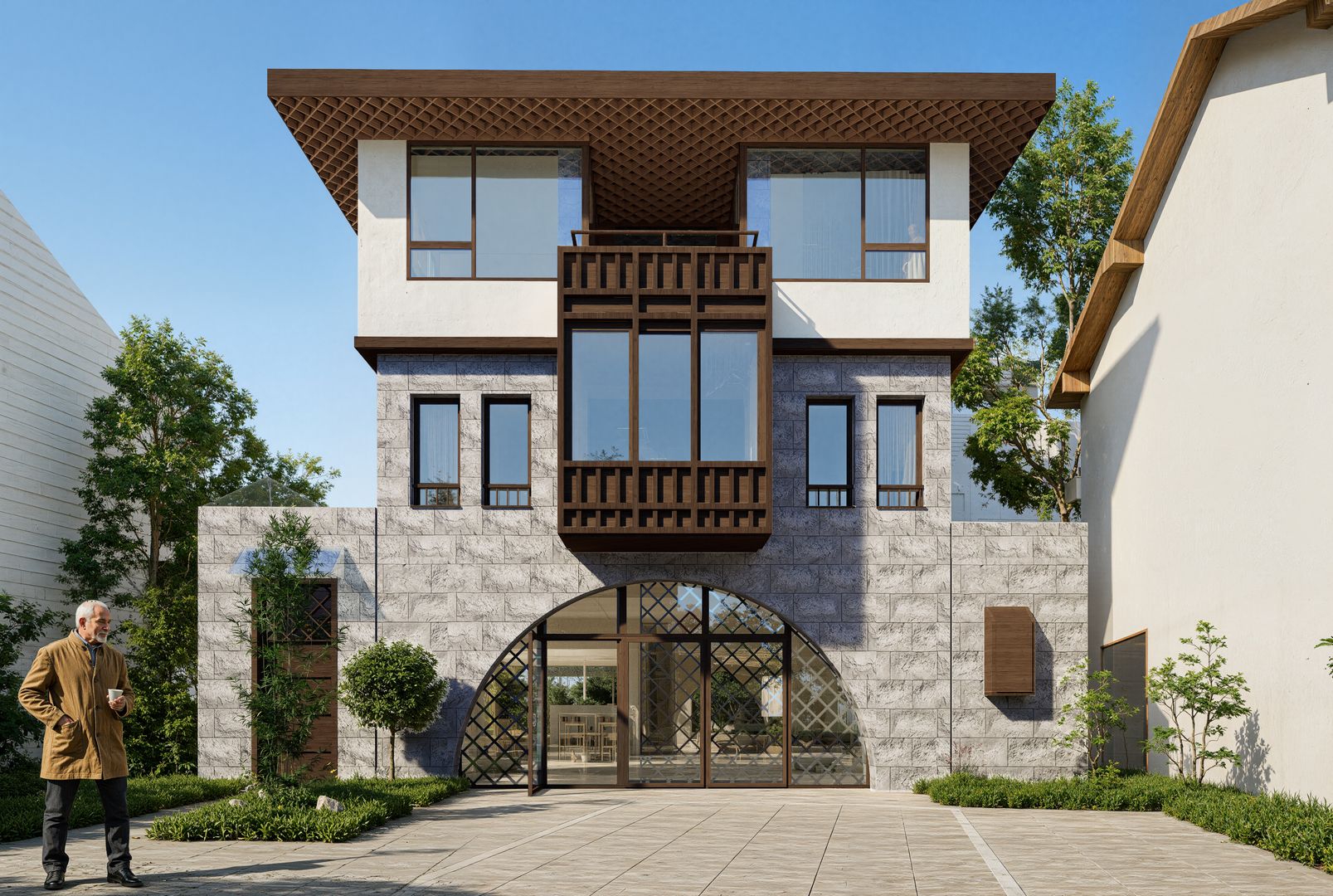
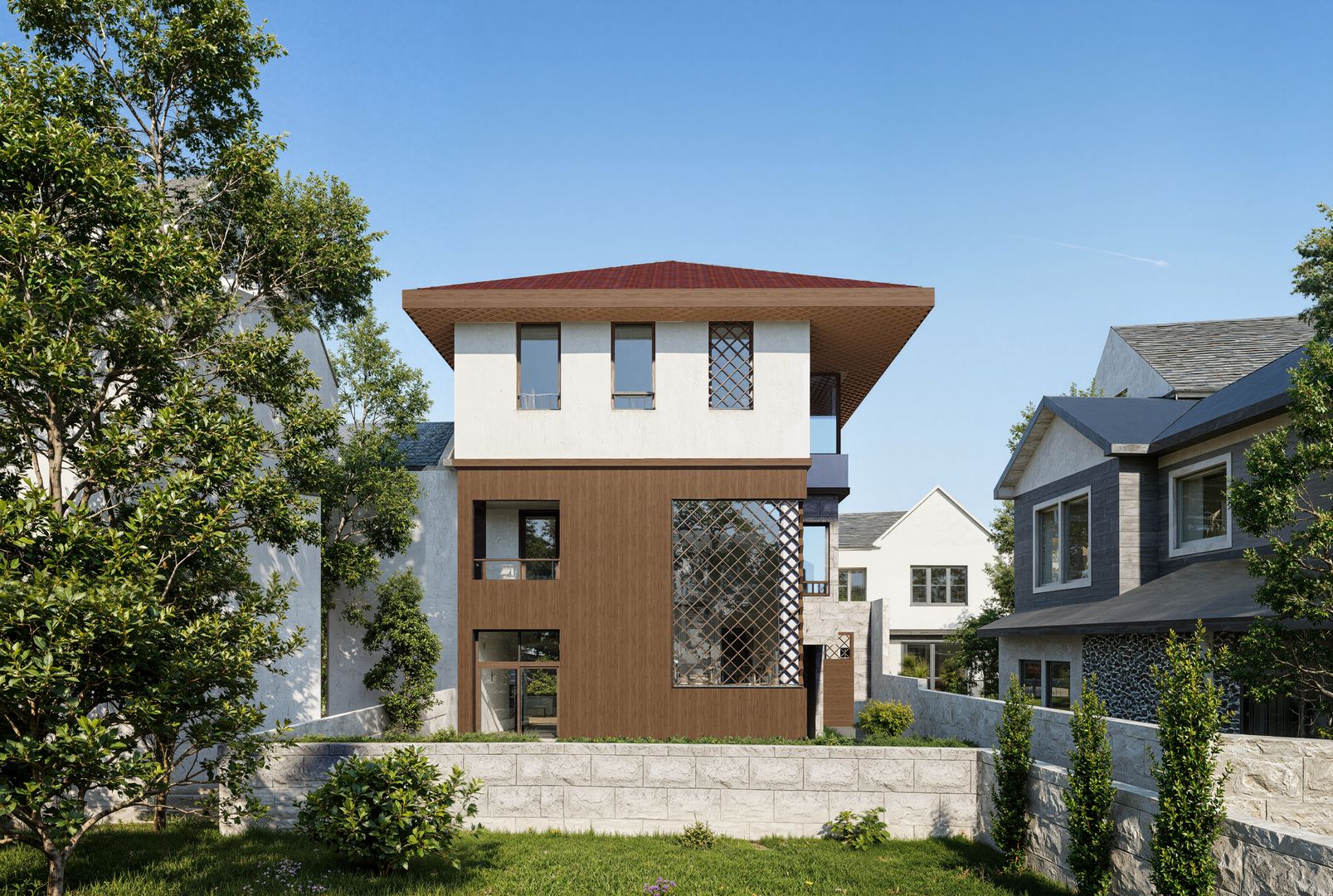
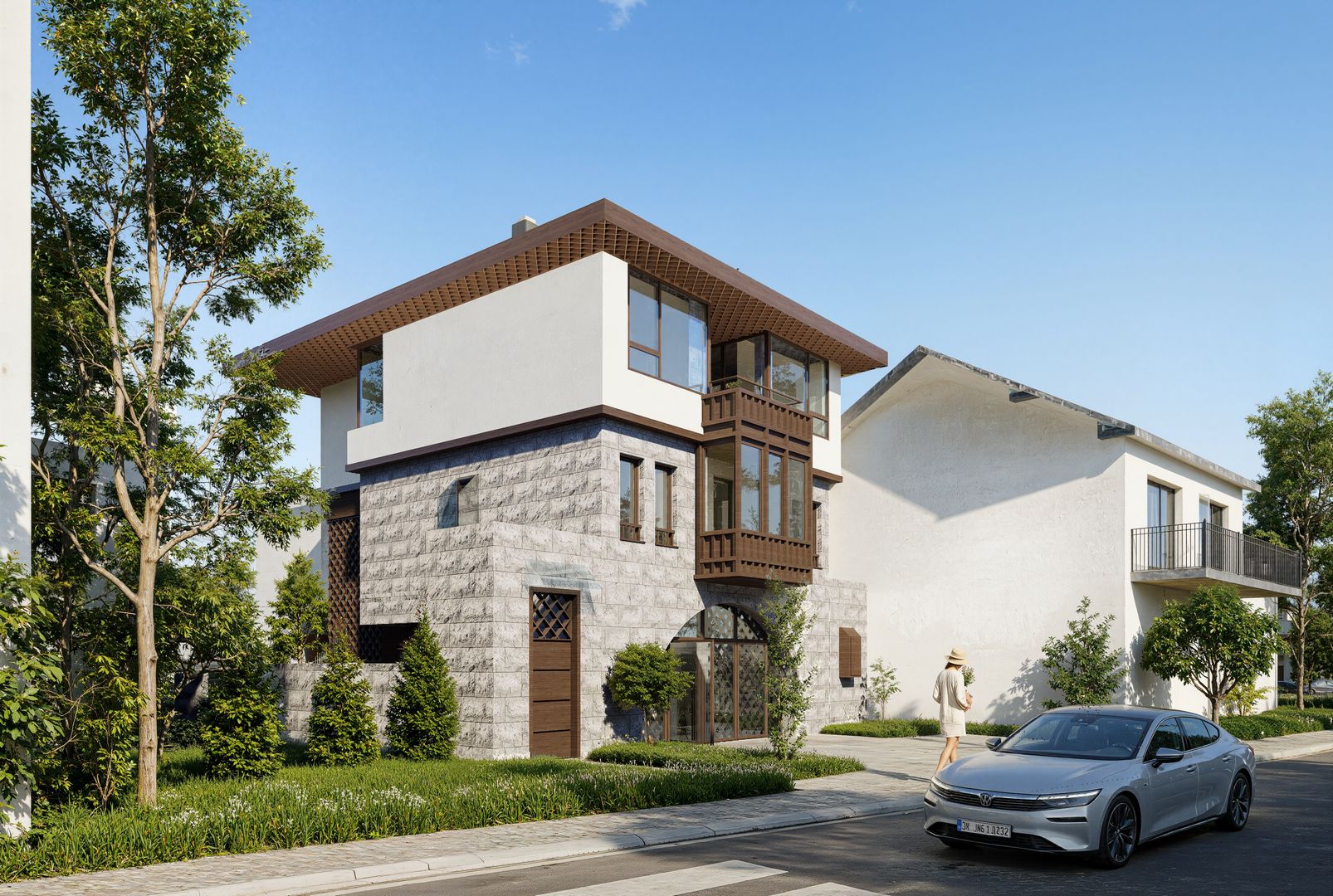
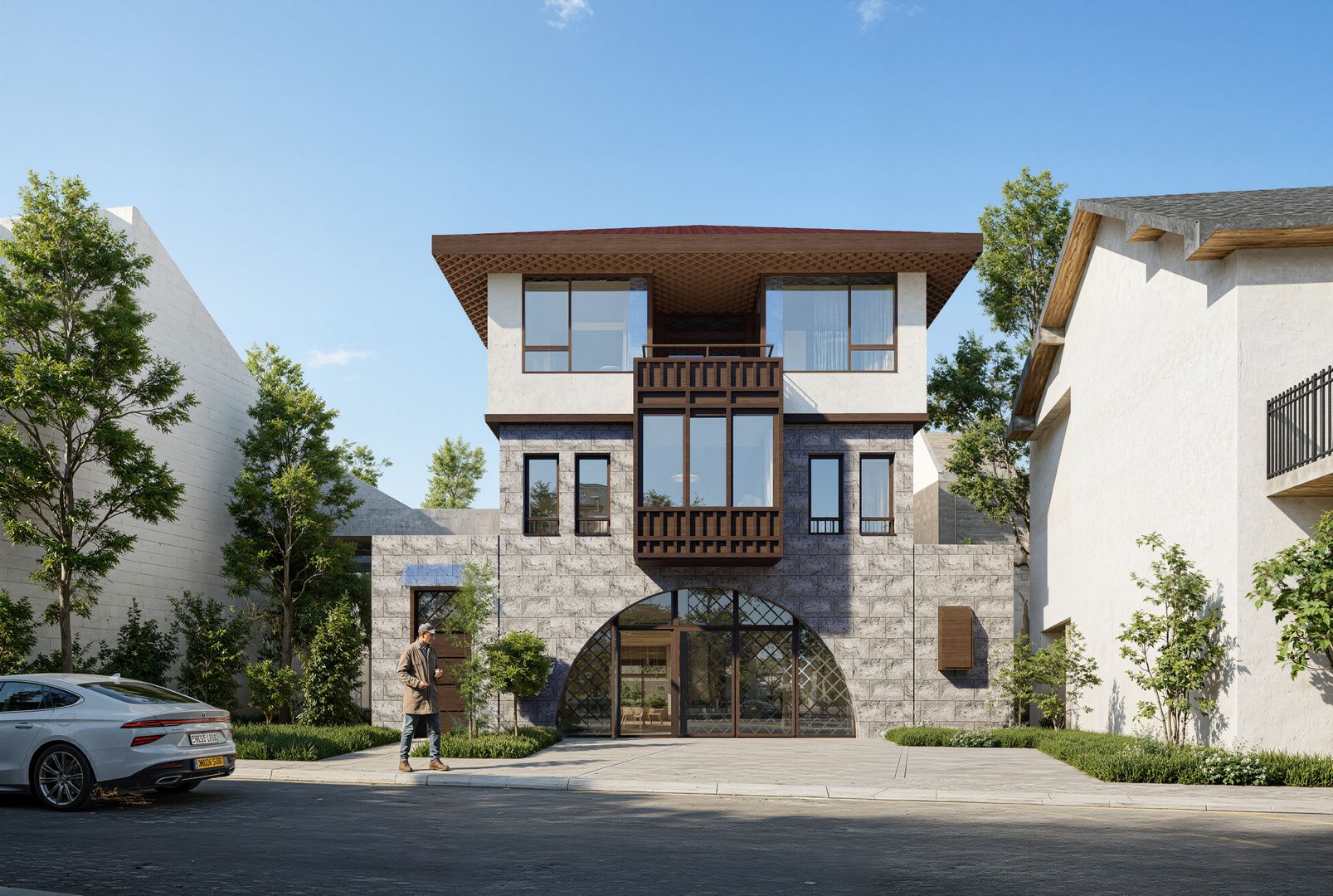
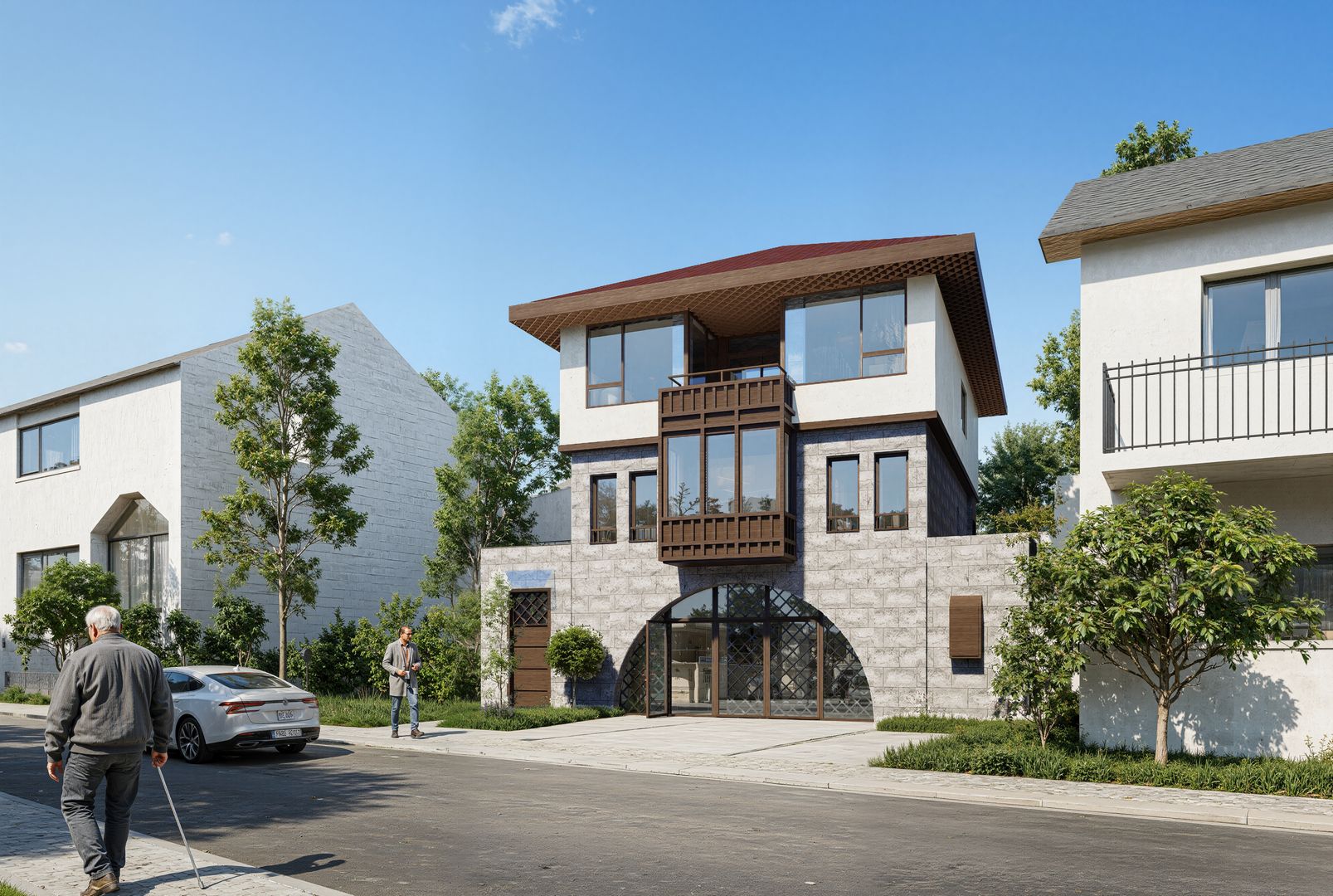
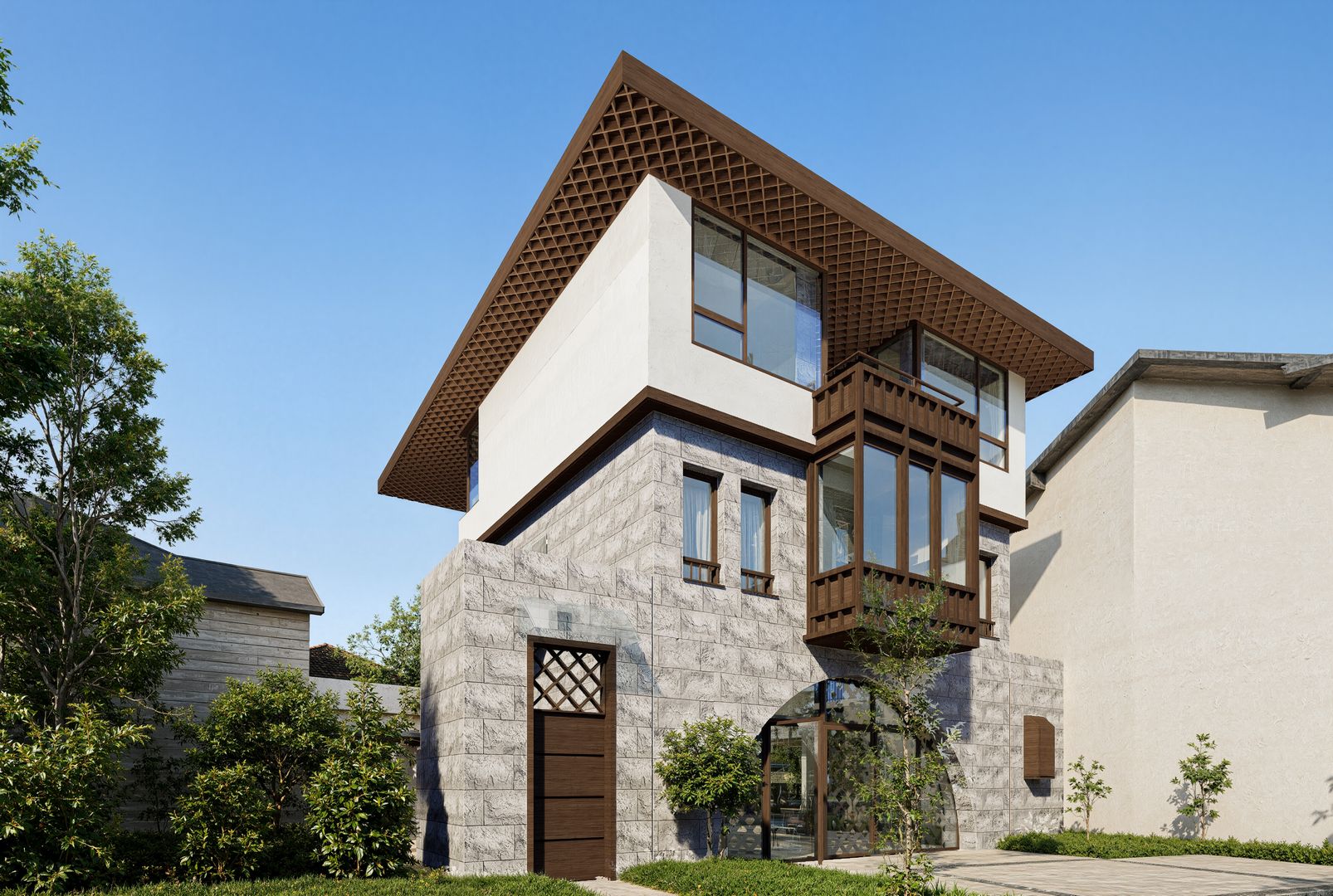
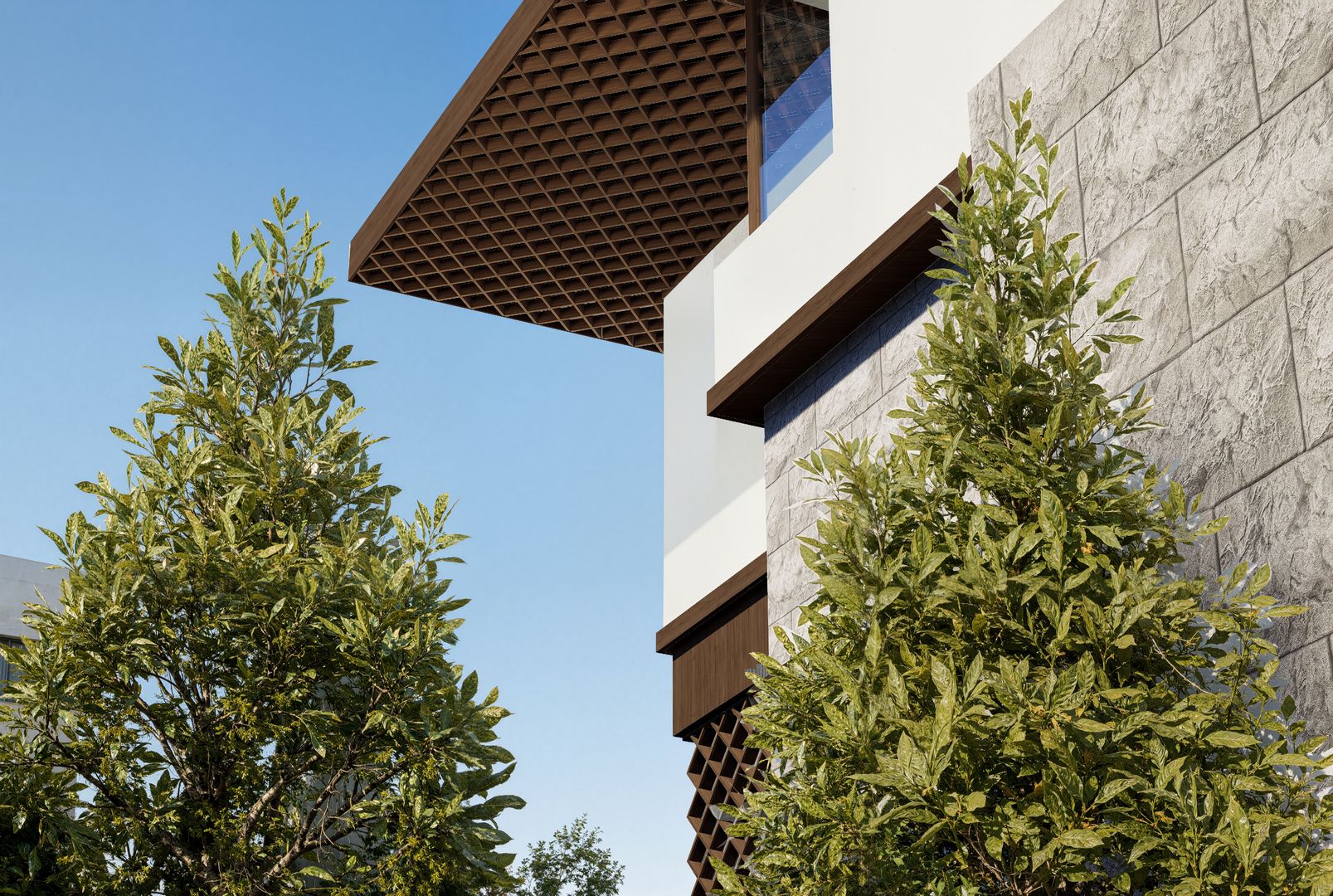
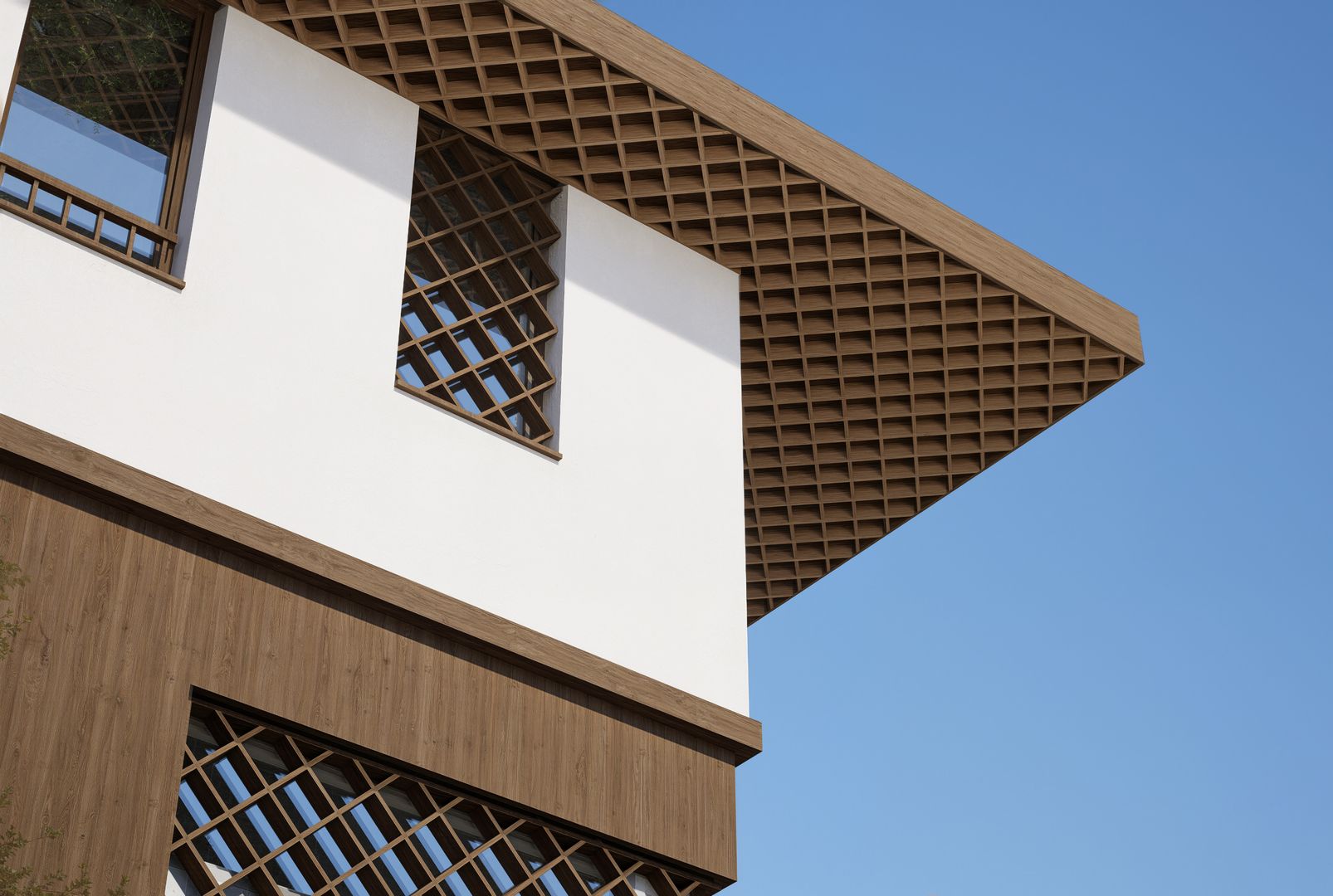
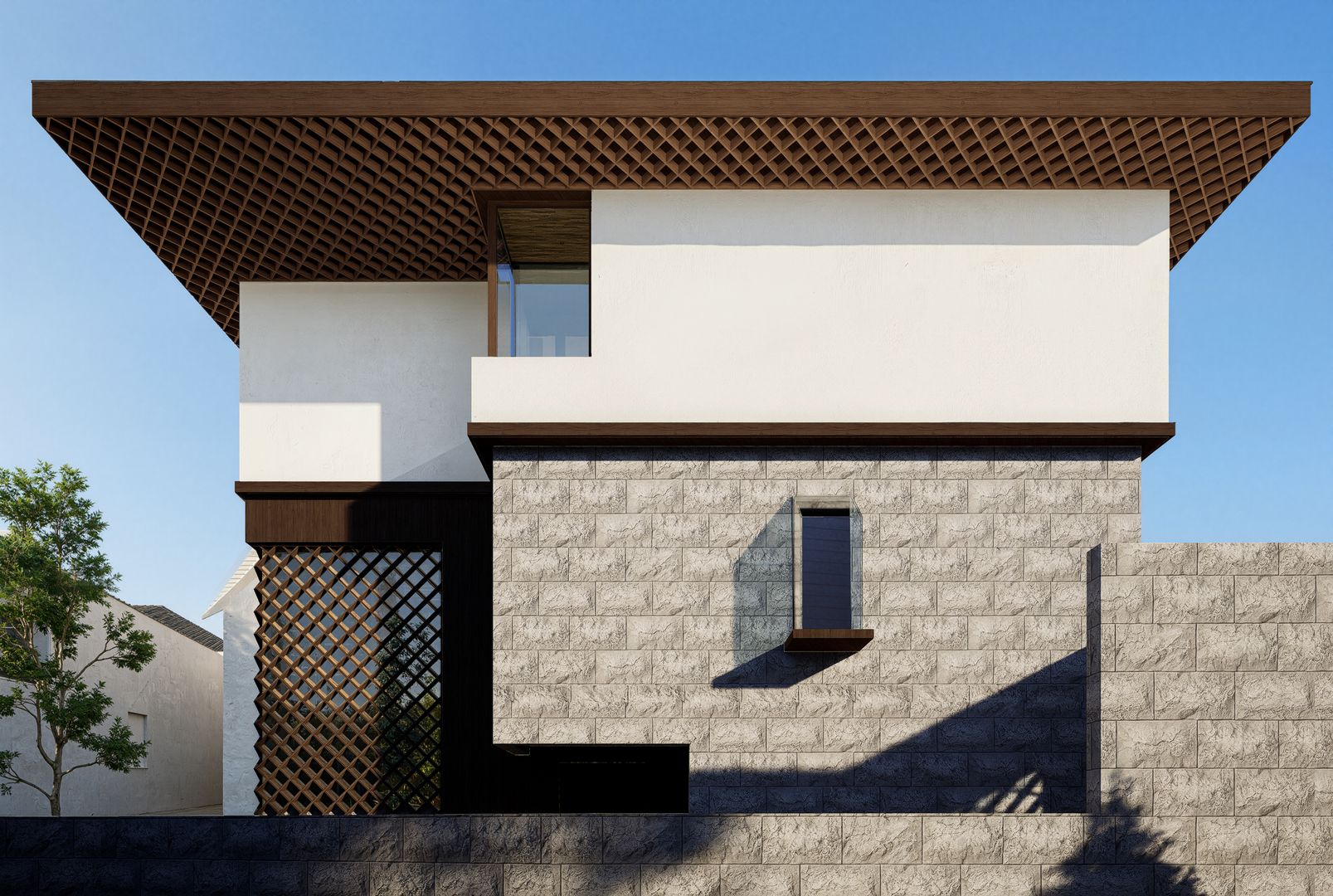
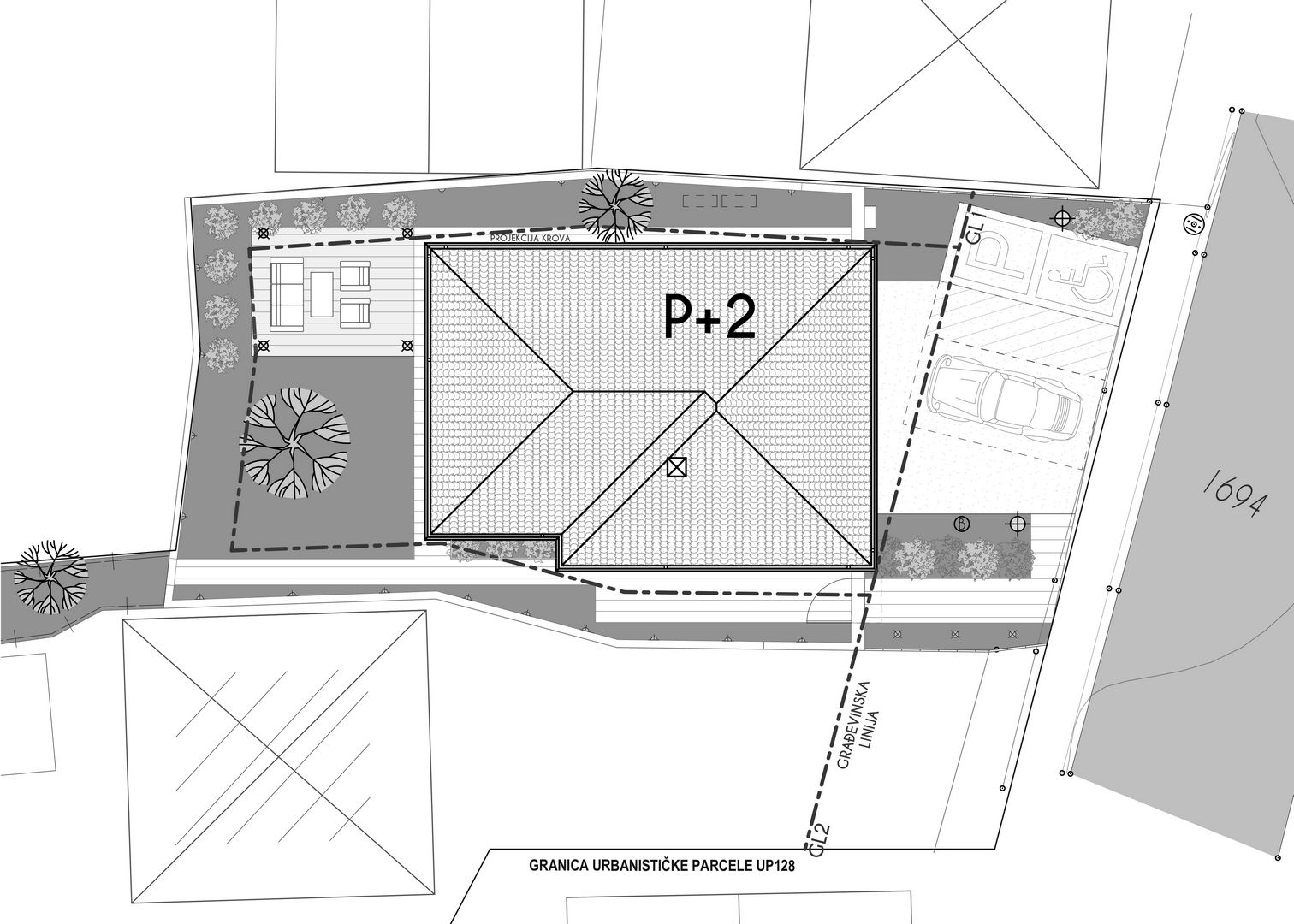
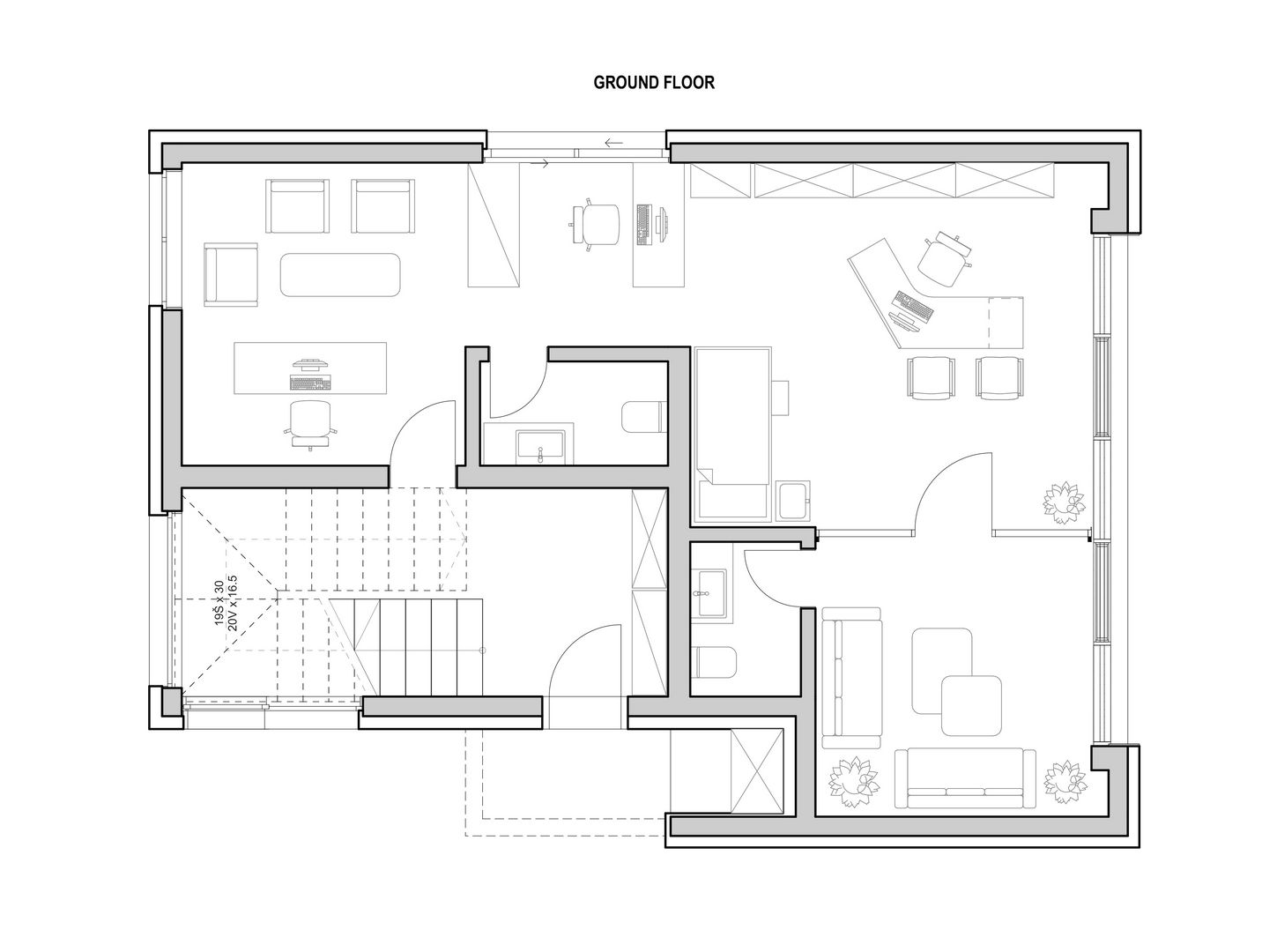
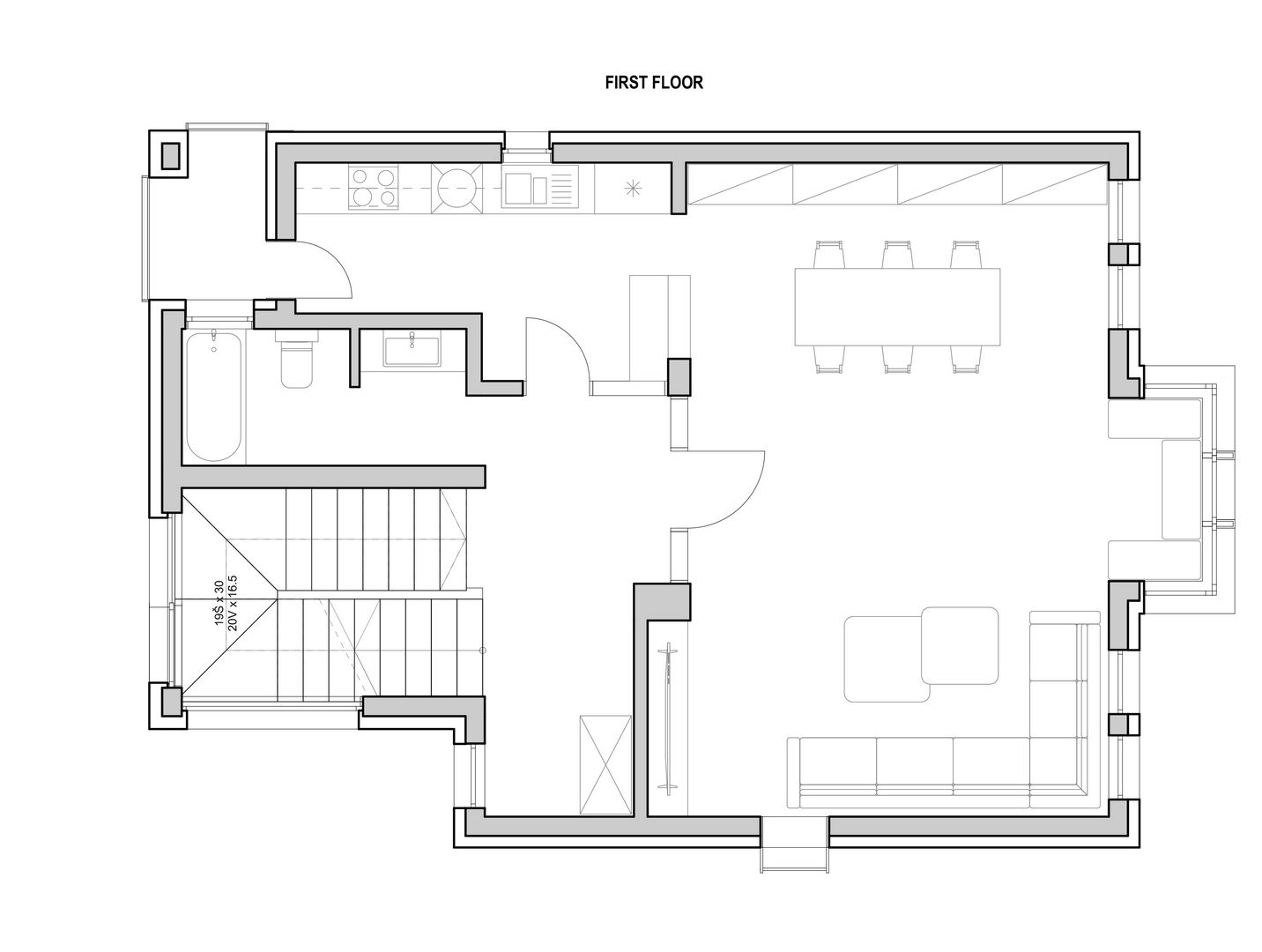
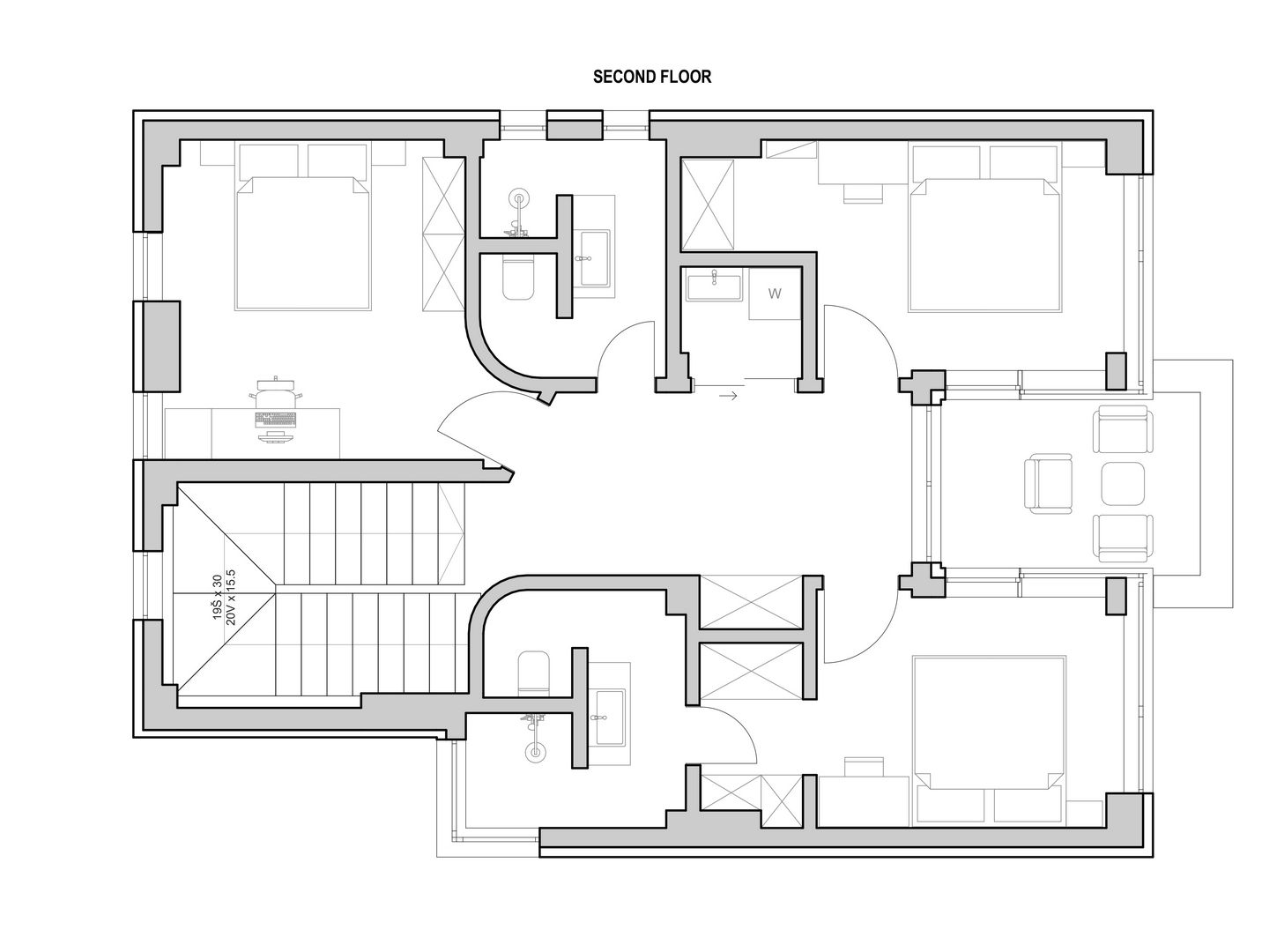
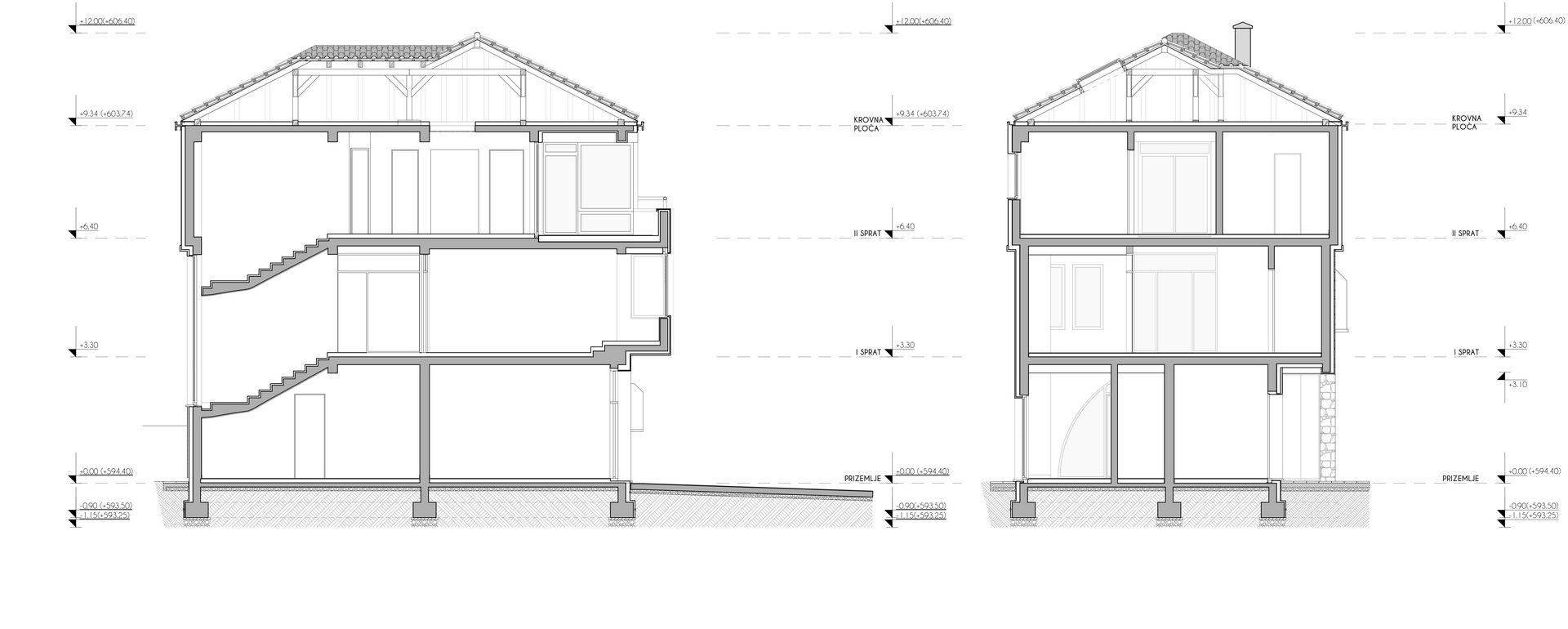
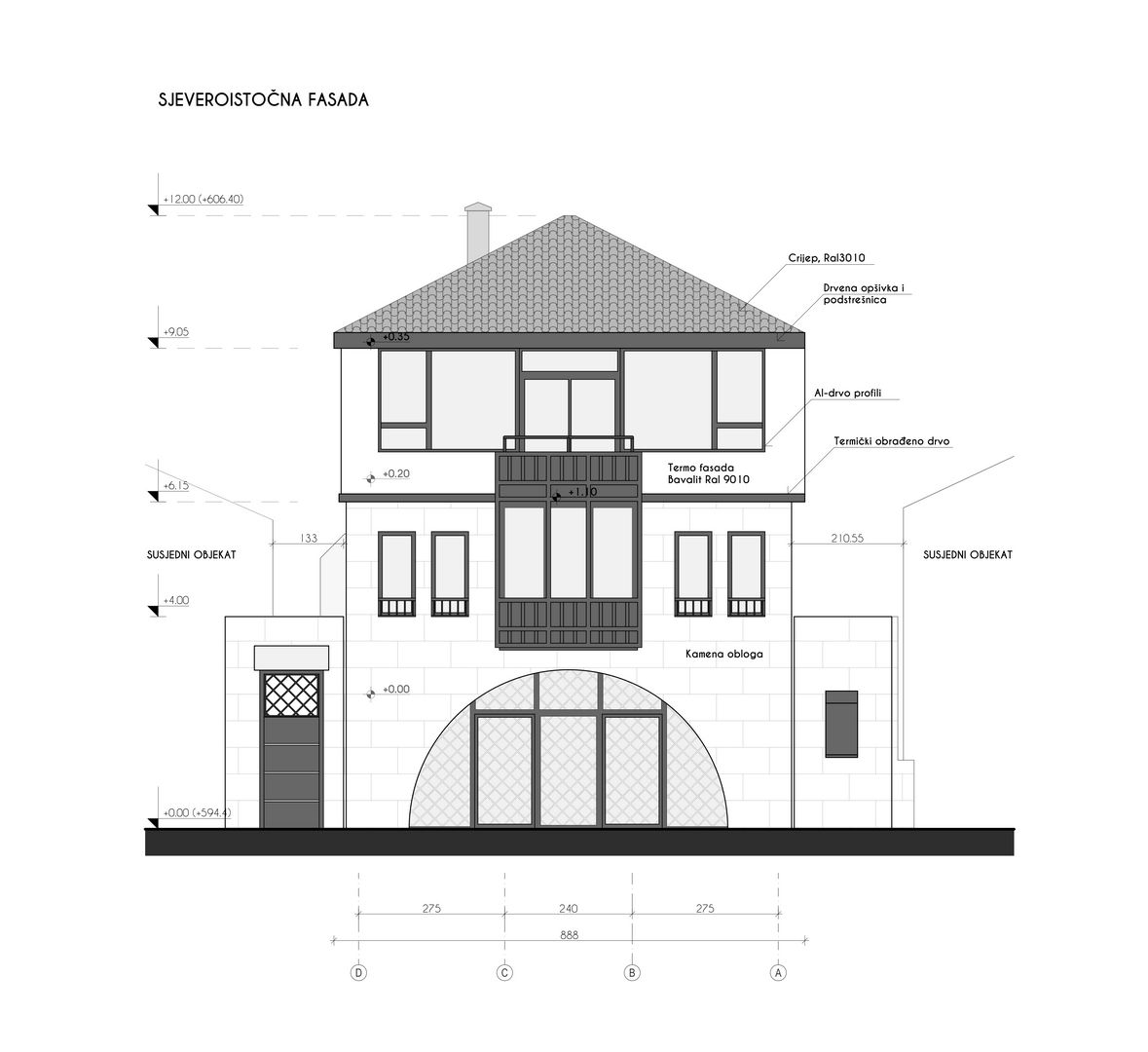
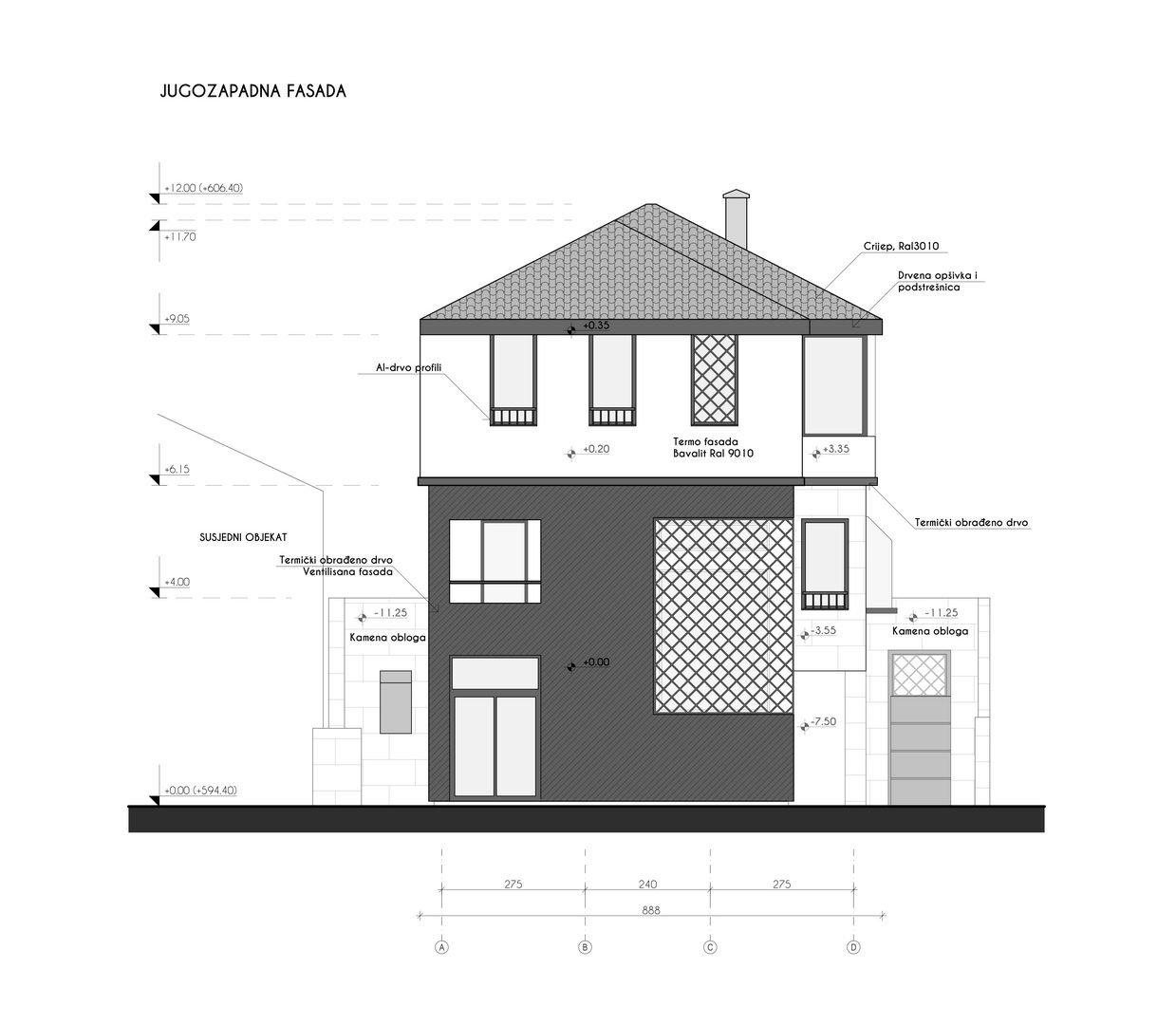
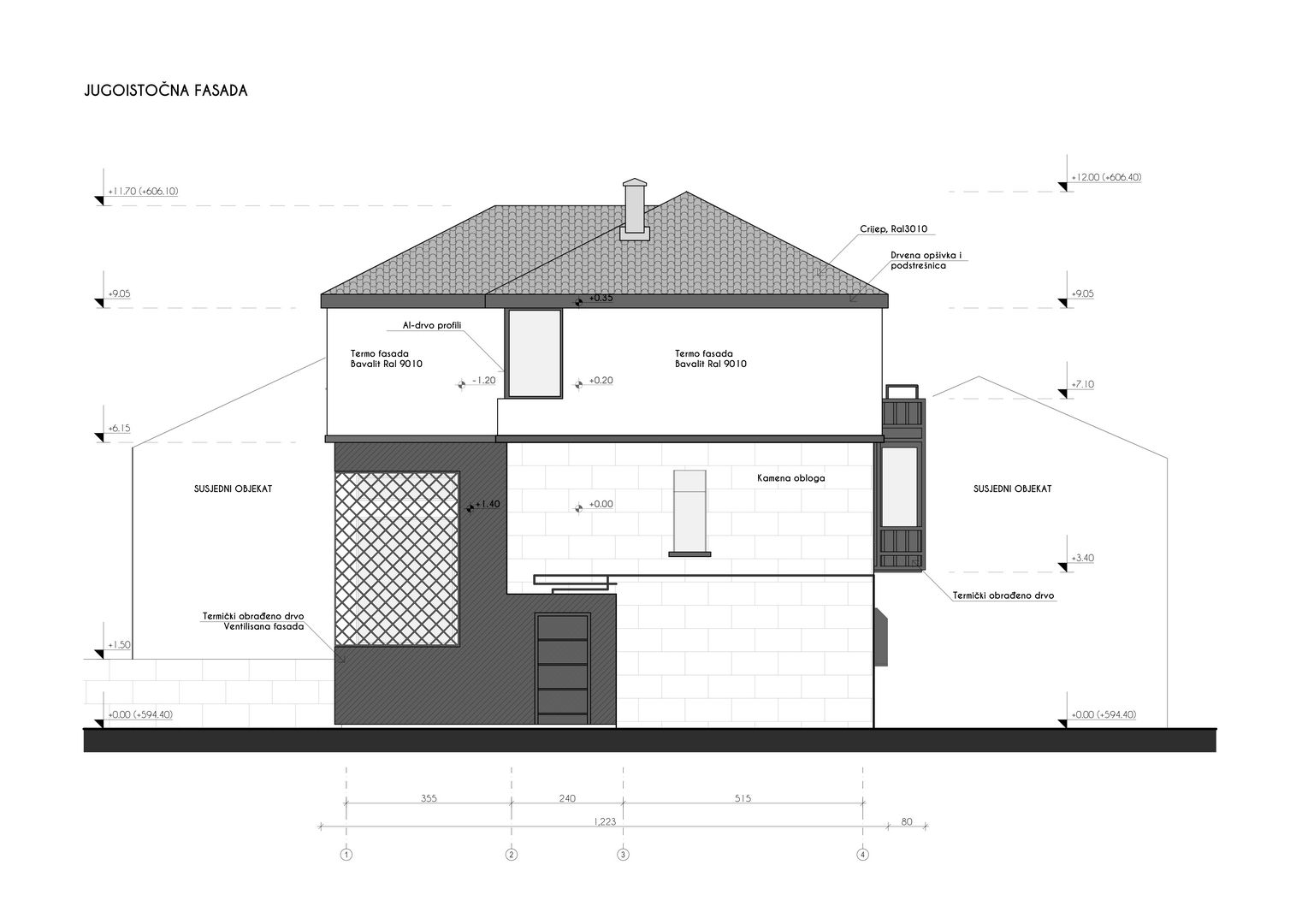
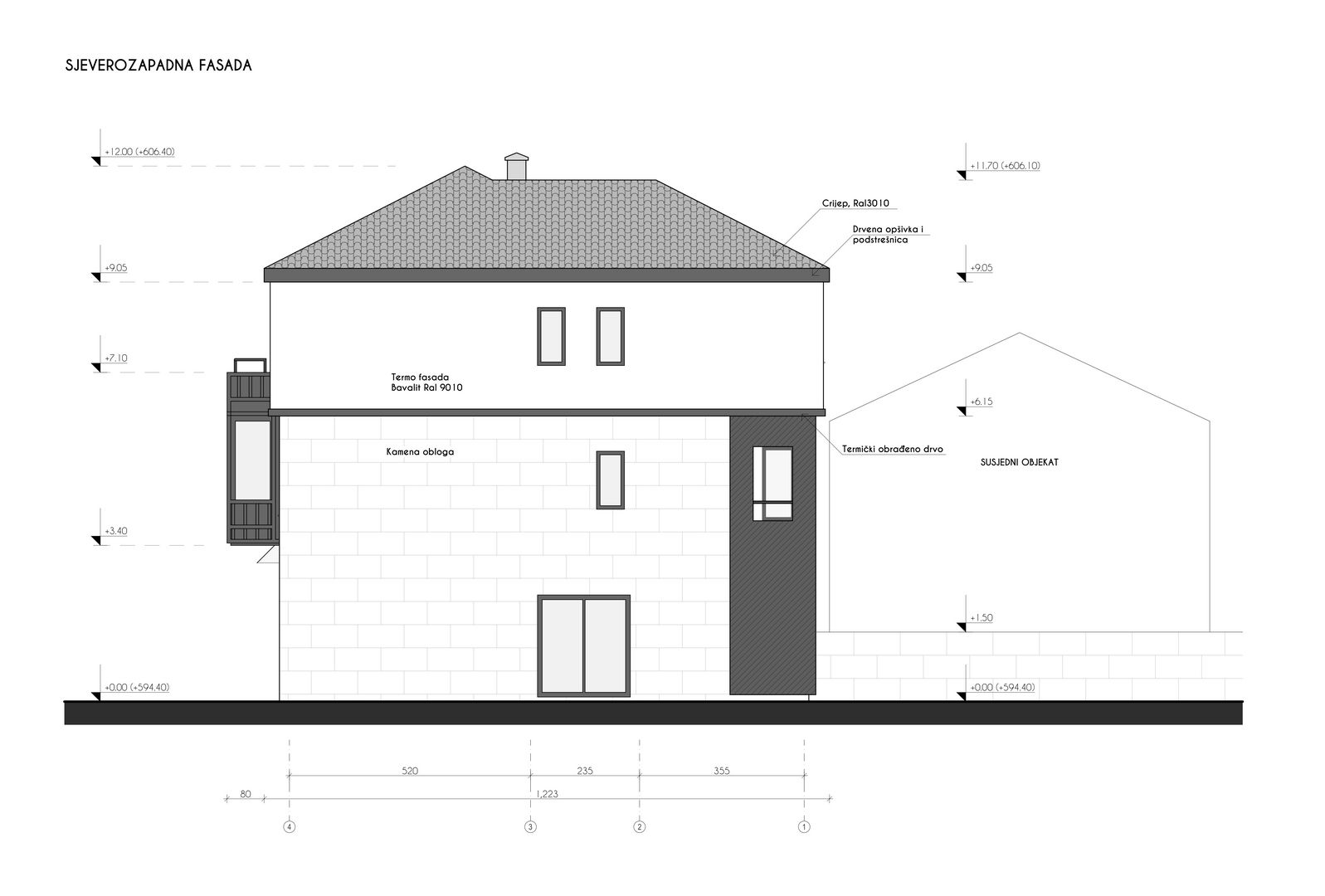
The main idea was to reinterpret the traditional “Bijelo Polje house” with its recognizable elements of Oriental architecture—such as the doksat (projecting balcony), podstrešnica (eaves), and mušebek (wooden lattice)—while using contemporary materials and clean lines so that these elements remain visually identifiable on the building. As the newly designed building has three floors, the goal was to visually unify the first two floors (ground floor and first floor) into a single perceived volume. This was achieved through a consistent material treatment across the first two floors and an arched opening that prevents the façade from being fragmented. The doksat on the first floor, as well as the covered terrace within its dimensions on the second floor, serves to connect the two visual sections—the stone of the lower floors and the white of the second floor. The four-pitched roof, a traditional element, is enriched with podstrešnica featuring a mušebek matrix (diagonal wooden lattice), which also appears on the façade in multiple locations, primarily at the stairwell opening in the courtyard designed as a more intimate area. This effect is reinforced by introducing boundary walls flush with the entrance façade, using the same material as the first two floors, further emphasizing the visual unity of these elements.Highlighted features such as the arched 6-meter-wide entrance to the commercial part, the separate entrance to the residential part with a prominent glass canopy, and the wooden viđenica detail are among the elements that contribute to the building’s distinct visual identity.